
Artikel zu GEO

Beyond llms.txt: The Four-Layer Machine-Readable Content Architecture
llms.txt was step one and it is running out of road. A four-layer machine-readable content architecture — JSON-LD, entity relationships, content APIs, provenance metadata — and a 90-day minimum viable implementation.

The Organizational Execution Gap: Why 70% of SEO Teams Stall on the AI Transition
70% of SEO teams understand the AI transition. Only 30% have restructured. The 40-point gap between knowing and doing is the actual failure mode. A four-phase sequencing model and a 90-day scorecard.

AI Gives Practitioners Vocabulary. Expertise Has to Be Built Differently
AI gives every practitioner the vocabulary of expertise. Expertise itself is built through unaided reps on hard problems. Why Layer 1 fluency masks Layer 2 collapse, and how to position GEO work in the layers that compound.

Search Routes Out. LLMs Keep You In. Why AI Visibility Needs New ROI Math
AI referrals as a percentage of traffic are the wrong metric. Search was built to route out; LLMs were built to keep users in. The new measurement is being the source the answer is built from.
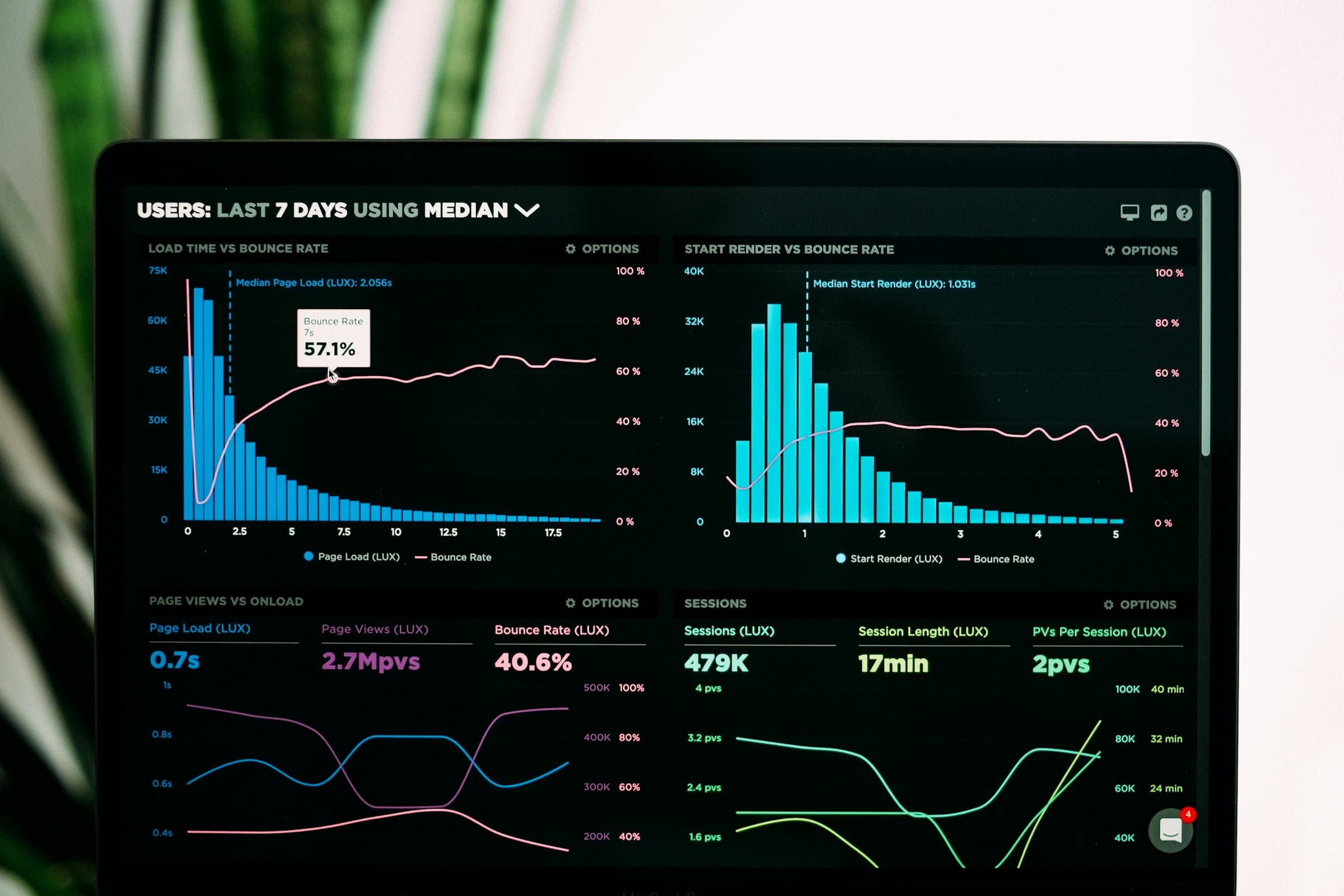
AI Visibility Is Three Problems, Not One: Retrieval, Knowledge Graph, Context Graph
AI visibility is not one metric. It is three structural problems on three different layers — retrieval, knowledge graph, context graph — each needing a different fix. How to diagnose which layer is broken before producing more content.
LLM Guidance Doesn't Port the Way SEO Guidance Did: A Per-Platform Strategy
SEO guidance ported across engines because Google, Bing, and Yahoo built shared standards. LLMs share almost nothing. Why per-platform tracking is now the discipline, and how Aurora structures it.
You're Using AI for Execution. The Real Leverage Is in Judgment
Most practitioners use AI for execution — drafts and lookups — leaving the four modes that compound (Deciding, Ideating, Critiquing, Talking) on the table. Where the judgment layer lives for an AI-search visibility program.

AI Visibility Needs Data for Decisions and Evidence for Conversations
AI visibility is not one metric. It is at least four — memory, retrieval, paraphrase, and competitive substitution — and each demands a different fix. How to measure them and bring the right evidence to a leadership conversation.
Vector Alignment Scores Are Not Truth: Reading the Number Without Falling for It
Vector alignment scoring is a real upgrade over keyword research — and a real trap if you read the number as ground truth. Why production retrieval signals matter more than offline embeddings, and how Aurora closes the gap.
Don't Measure Once: How to Reliably Measure AI Visibility
New research shows that measuring a brand's AI visibility requires simultaneous and longer-term repeated measurements — not one-time ranking snapshots. Here are the key findings and what they mean for marketers.

From SEO to GEO: A Digital Marketer's Transition Guide
A practical guide for SEO professionals expanding into Generative Engine Optimization. Covers what transfers from SEO, what changes fundamentally, new skills to develop, and how to build a GEO service offering alongside traditional search optimization.
The Hidden SEO Benefits of GEO Optimization
GEO optimization doesn't just improve AI search visibility -- it also produces significant gains in traditional SEO performance. Discover the hidden SEO benefits of investing in Generative Engine Optimization.

What Makes a Source Authoritative in AI Search?
What makes AI search engines trust and cite your content? Explore the key factors that determine source authority in AI search, from original data to structural clarity and third-party validation.

The Future of GEO: Predictions for 2027 and Beyond
Forward-looking analysis of where Generative Engine Optimization is heading. Nine predictions covering multimodal search, AI agents, personalization, source attribution, vertical AI, content authenticity, regulation, and conversational commerce.

Multi-Language GEO: Optimizing for AI Search Across Markets
Most GEO strategies focus only on English, but AI search is global. Learn how to optimize for AI visibility across multiple languages and markets, with language-specific challenges and strategies.

Building a GEO Strategy: A Step-by-Step Playbook
A comprehensive, step-by-step playbook for implementing Generative Engine Optimization from scratch, covering discovery, content creation, authority building, and ongoing measurement.
GEO Quick Wins: 10 Things You Can Do Today
Ten immediately actionable GEO optimizations you can implement today. From FAQ schema and robots.txt fixes to content restructuring and video creation, each quick win includes step-by-step instructions and time estimates.
How Agencies Can Offer GEO Services to Their Clients
A practical guide for digital marketing agencies looking to build GEO services. Covers what to offer, tools needed, pricing strategies, and how to demonstrate value to clients.

The Role of Internal Linking in AI Search Performance
Internal linking shapes how AI crawlers discover content, assess topical authority, and decide which pages to cite. Learn a practical framework for optimizing your site architecture for AI search.

AI Search for Insurance Companies: Trust, Compliance, and Visibility
A comprehensive GEO guide for insurance companies balancing regulatory compliance with AI search visibility. Covers compliant content strategies, trust signals, data-driven content pillars, and technical implementation for insurance brands.

How E-Commerce Brands Can Optimize for AI Shopping Recommendations
AI shopping assistants like ChatGPT and Perplexity are reshaping product discovery. Learn how e-commerce brands can optimize their content to appear in AI-generated product recommendations.

AI Search Optimization for Food and Beverage Brands
AI search is becoming a primary discovery channel for food and beverage products. Learn industry-specific GEO strategies to get your F&B brand recommended by AI search engines.

How to Leverage LinkedIn Content for AI Search Visibility
LinkedIn has become one of the most cited sources in AI-generated responses. Learn how to optimize your company page, personal profiles, and content strategy to leverage LinkedIn for AI search visibility.

The Impact of Site Speed on AI Search Crawling and Citation
Explore how site performance directly impacts AI search engine crawling and citation rates. Learn which speed metrics matter most for AI crawlers and how to optimize server response, rendering, and content delivery for maximum AI visibility.

llms.txt Files: Do They Actually Help AI Visibility?
The llms.txt standard promises to help AI models understand your website, but does it actually improve visibility? We examine the evidence, benefits, and practical considerations.
The Technical SEO Foundations That Support AI Visibility
Technical SEO remains the foundation of AI search visibility. Learn which technical factors directly impact whether AI engines can crawl, process, and cite your content.

AI Search for Real Estate: Getting Properties Recommended
AI search is transforming how homebuyers research properties and find agents. Learn specific GEO strategies for real estate agents, brokerages, and property platforms to capture AI-driven leads.

How to Get Your Research Papers Cited by AI Search Engines
Practical strategies for academic researchers to increase their visibility in AI-powered search engines. Learn how to make research papers more accessible and citable by AI through open access publishing, companion content, and structured data.

The Complete Guide to AI Search for Startups
A resource-efficient GEO playbook for early-stage companies. Learn how startups can build AI search visibility through proprietary data, authentic expertise, and lean content strategies that maximize impact on a limited budget.

How Automotive Brands Can Drive AI Search Visibility
Discover how car manufacturers and dealerships can optimize their presence in AI-powered search engines through structured vehicle data, expert content strategies, and dealership-level GEO techniques.
GEO-Plattformen im Vergleich: Welches AI-Visibility-Tool passt zu eurer Agentur?
Eure Kunden fragen nach AI Search. So schneiden die führenden GEO-Plattformen im Vergleich ab — und worauf es bei der Verwaltung mehrerer Brands wirklich ankommt.
The Agency's Guide to GEO Platforms: Which AI Visibility Tool Fits Your Client Work?
Your clients are asking about AI search. Here's how the leading GEO platforms compare — and what matters most when you're managing multiple brands.
How B2B Companies Can Win in AI Search
B2B companies face unique opportunities in AI search thanks to long research cycles and expertise-driven trust. Learn specific GEO strategies for B2B including original research, technical content, and thought leadership.
The Complete Checklist for AI Search Readiness
A comprehensive 20-point checklist for assessing and improving your brand's AI search readiness — covering organizational identity, content depth, trust signals, technical optimization, and monitoring.

AI Search and Customer Reviews: Turning Feedback Into Visibility
Customer reviews are a primary data source for AI search recommendations. Learn how to build a review strategy that improves both your reputation and your visibility in AI-generated responses.
The Impact of Structured Data on AI Search Visibility
Structured data helps AI search engines understand and cite your content more effectively. Learn which schema types matter most and how to implement them for maximum AI visibility.

Content Freshness and AI Search: How Often Should You Update?
A practical guide to content update frequency for AI search visibility — understanding freshness signals, categorizing content by update needs, and building a sustainable refresh practice.

The Importance of Entity SEO for AI Search Visibility
Entity SEO is foundational to AI search visibility. Learn how to build your brand as a clearly defined entity that AI systems can identify, understand, and recommend to users.
How to Perform a Source Gap Analysis for AI Search
Learn how to perform a source gap analysis to identify where competitors earn AI search citations that you miss, and build a prioritized plan to close those gaps.

AI Search Optimization for Legal Services
Law firms face unique challenges in AI search optimization, from ethical advertising rules to jurisdictional complexity. Learn tailored GEO strategies for the legal industry.
Data-Driven GEO: Using Analytics to Prioritize Optimization Efforts
A practical framework for using analytics to prioritize GEO optimization efforts. Learn how to audit AI visibility, map competitive gaps, score opportunities, and build a data-driven roadmap for maximum impact.

Content Strategies That Win in AI-Powered Search
Discover what type of content gets cited by AI search engines and how to structure your content strategy for maximum visibility in ChatGPT, Perplexity, and Google AI Mode.
Why Your Brand's Knowledge Graph Matters for AI
Your brand's knowledge graph determines how AI search engines recognize, understand, and cite your brand. Learn why it matters and how to strengthen your entity representation across AI systems.

AI Search Optimization for Nonprofit Organizations
Practical, budget-friendly AI search optimization strategies for nonprofit organizations — leveraging existing expertise, free tools, and volunteer resources to build visibility in AI-generated results.

How Financial Services Can Navigate AI Search
A strategic guide for financial services firms to build AI search visibility while maintaining regulatory compliance — covering educational content, structured data, and industry-specific approaches.

GEO for Education: How Universities Can Increase AI Visibility
Universities face a new challenge: being visible in AI-powered search results. Learn how higher education institutions can use GEO strategies to appear in AI responses for prospective students and researchers.

The Anatomy of an AI Search Citation
A deep dive into the structure of AI search citations: what they look like, where they appear, how visibility is scored, and what makes content worthy of being cited by AI engines.
Why AI Search Favors Long-Form Expert Content
Understand why AI search systems preferentially cite long-form expert content and learn how to structure deep, authoritative pieces that earn consistent AI visibility.
What is Generative Engine Optimization (GEO)? A Complete Guide
Learn what Generative Engine Optimization (GEO) is, why it matters for your brand, and how to optimize your content for AI search engines like ChatGPT, Perplexity, and Gemini.

Understanding Citation Rates in AI Search: Benchmarks and Best Practices
Learn what citation rates mean in AI search, how to benchmark your performance across ChatGPT, Perplexity, and Gemini, and best practices for improving your brand's citation rates.
How to Create Content That AI Engines Love to Cite
Learn the specific content characteristics, formats, and technical optimizations that make your content citation-worthy across ChatGPT, Gemini, and Perplexity.
Schema Markup Types That Matter for AI Search
A comprehensive guide to the schema markup types that most influence AI search visibility, from Organization and FAQ schema to Product and Article markup with practical implementation examples.

AI Search and PR: How Press Coverage Influences AI Citations
Discover how press coverage directly influences AI citations and learn digital PR strategies that maximize your brand's visibility across both human readers and AI search platforms.
The Impact of Reviews and Ratings on AI Search Citations
User reviews are one of the most influential factors in AI search recommendations. Learn which review attributes matter most and how to build a review strategy for AI visibility.

AI Search for Healthcare: Compliance, Trust, and Visibility
Healthcare brands face unique challenges in AI search visibility, from regulatory compliance to clinical evidence requirements. A strategic guide for healthcare GEO.

Why Your Wikipedia Page Matters for AI Search Visibility
Wikipedia has an outsized influence on how AI search engines understand and recommend brands. Learn why your Wikipedia presence is foundational to GEO success.
GEO vs SEO: Key Differences and Why You Need Both
SEO and GEO serve different purposes but work best together. Learn the key differences between traditional search optimization and AI search optimization, and how to build a strategy that leverages both.
What Is Generative Engine Optimization (GEO)? A Complete Guide for 2026
A comprehensive guide to Generative Engine Optimization (GEO) — the practice of optimizing your brand to be discovered and cited by AI-powered search engines like ChatGPT, Perplexity, and Gemini.
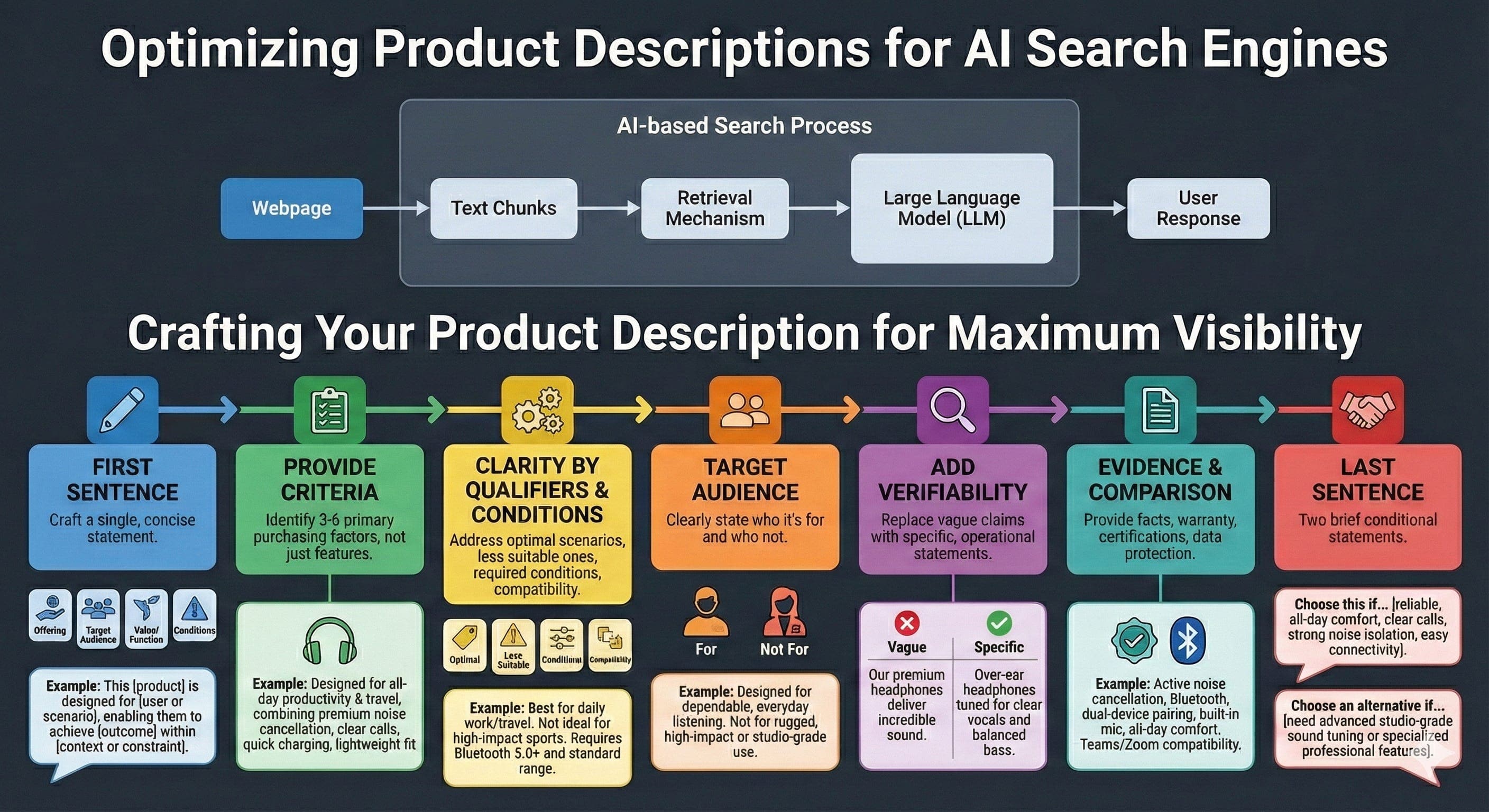
How to Optimize Your Product Description for ChatGPT, Perplexity etc.
Advice to write your webpage texts to get picked up by AI-based search engines like ChatGPT and Perplexity.
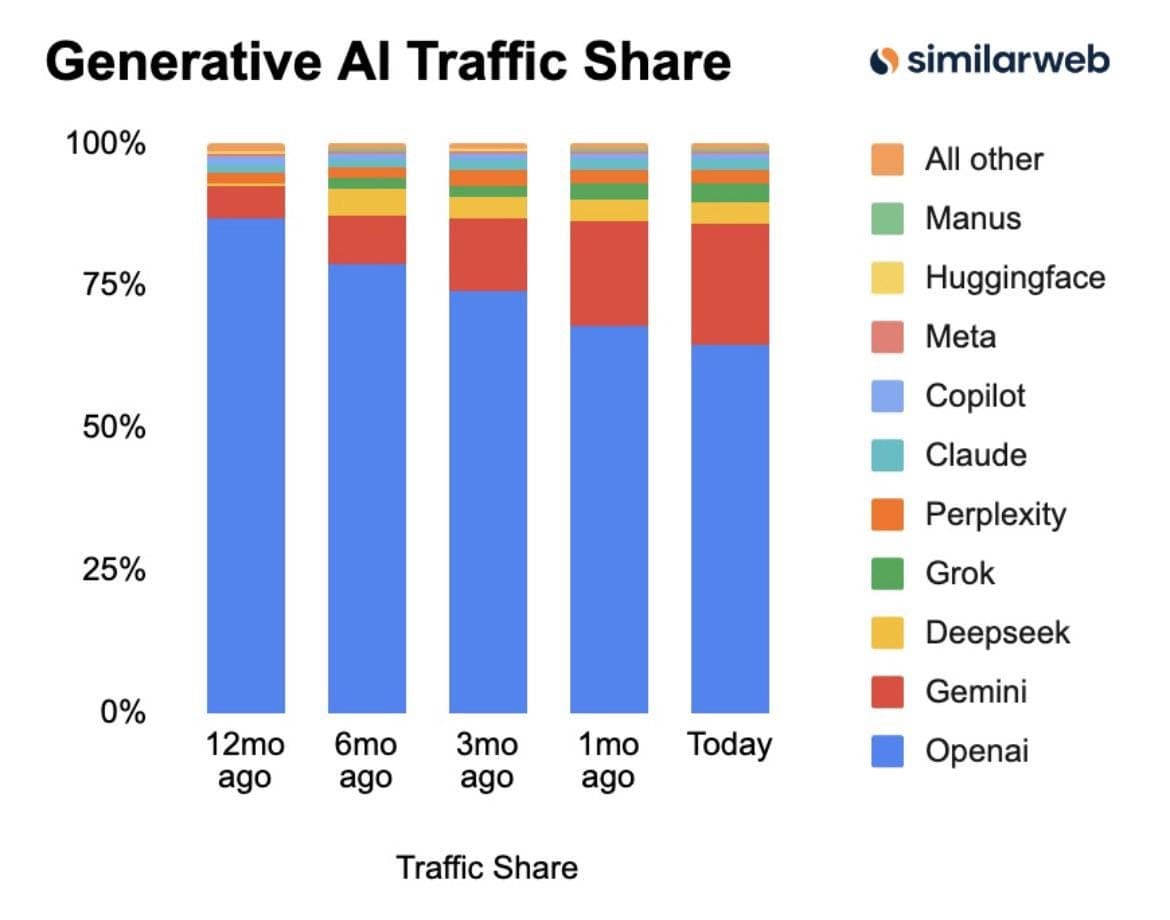
GEO, SEO - The Why and the What
Differences and commonalities between GEO and SEO - why Generative Engine Optimization matters for your brand.
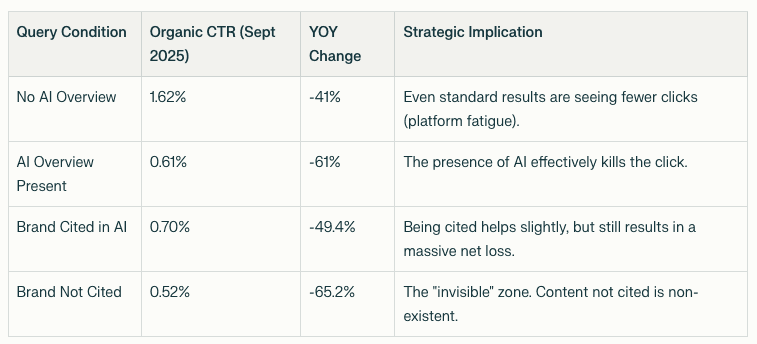
AI-based Search Engines: The Change of User Behaviour
The End of the Referral Economy - how AI search is transforming user behaviour with 60% zero-click searches and a 61% drop in organic CTR.
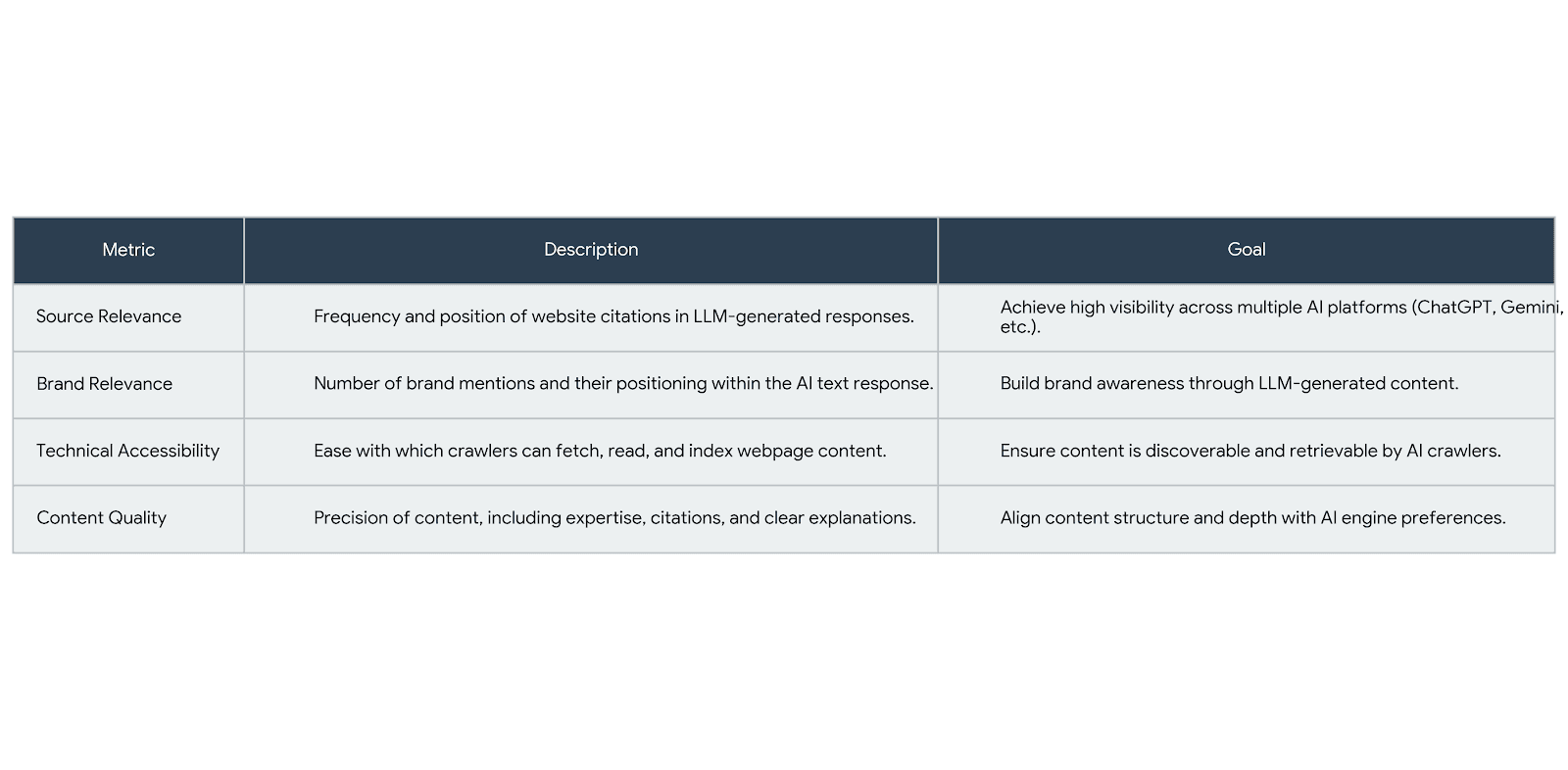
The New Metrics of AI-based Search
What to measure when AI does your search - new performance metrics for AI-driven search environments.
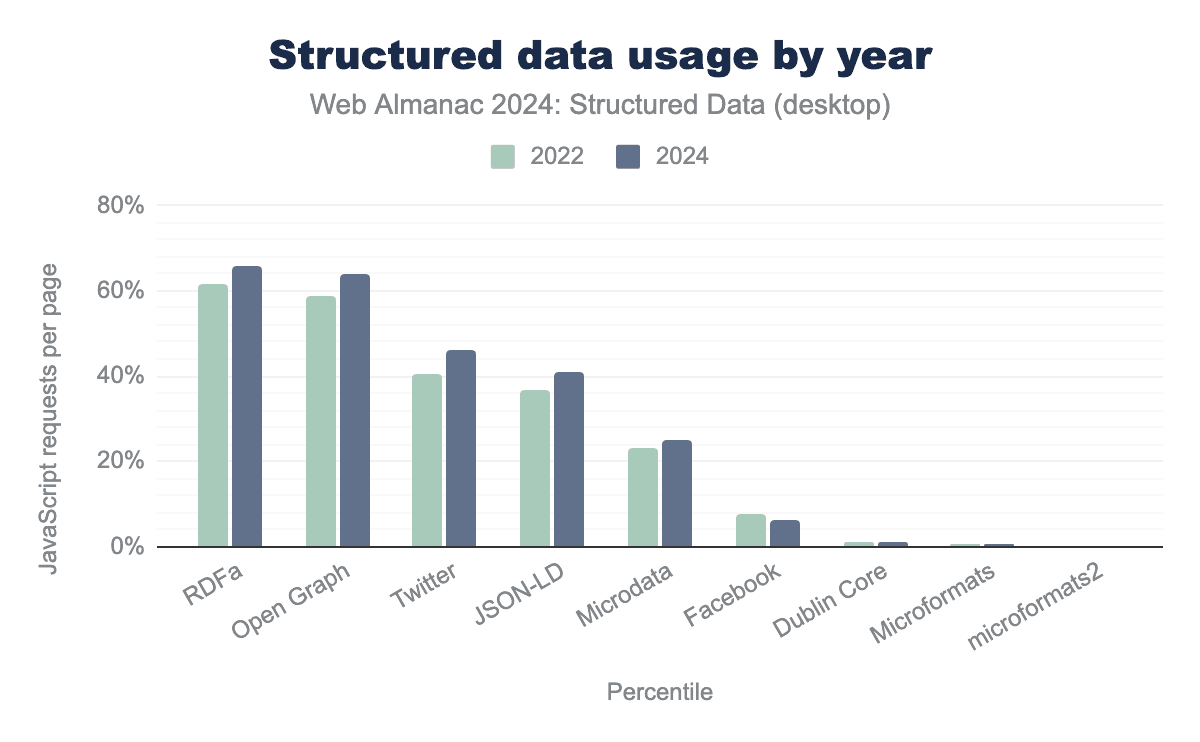
Skyrocketing Your Site's AI Visibility: Easy Wins with Structured Data
Structured data is the GPS for AI search engines. Learn how to implement JSON-LD, Open Graph, and schema markup to dramatically improve your brand's visibility in ChatGPT, Perplexity, and Gemini.