Hey there, fellow web warriors! Imagine your website as a bustling city — full of amazing content, but without clear signposts, maps, or street names, visitors (and search engines) get lost. That's where structured data comes in: it's the GPS for the digital world.
Why Structured Data Matters More Than Ever
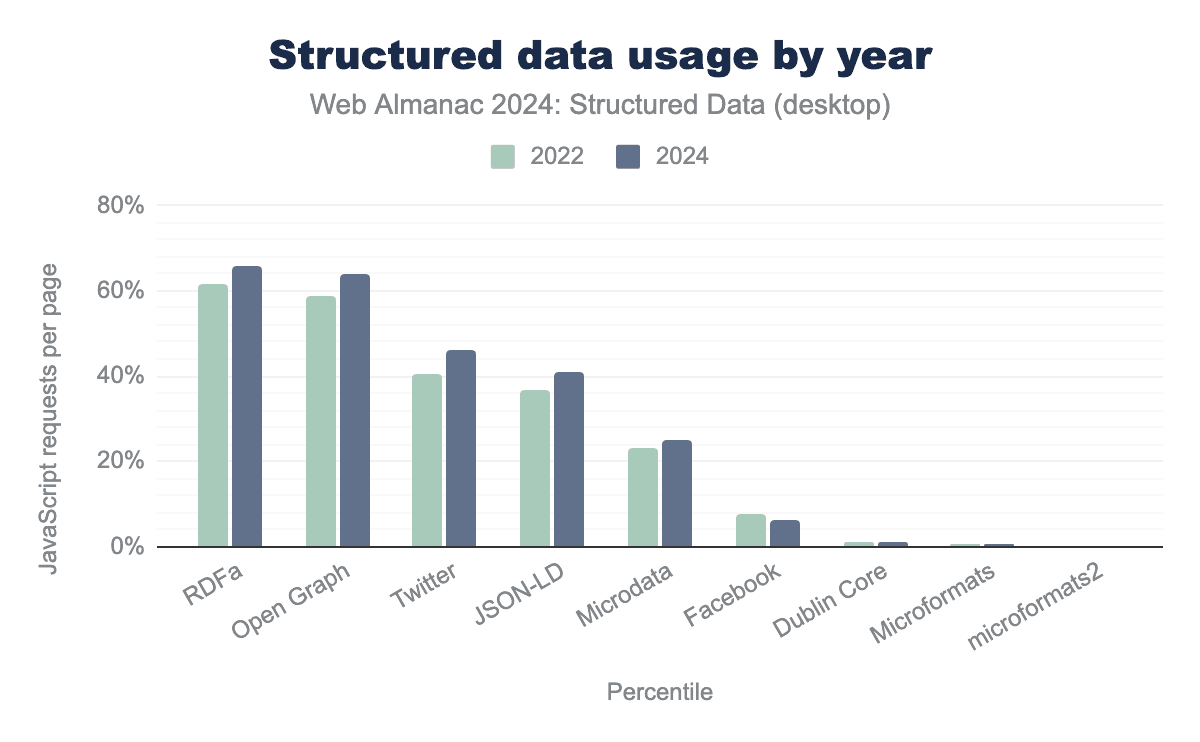
The numbers tell the story: 66% of web pages now use RDFa, 64% use Open Graph, and JSON-LD has jumped from 34% in 2022 to 41% in 2024. But the real game-changer? AI search engines.
Ecommerce sites using schemas like Product and Offer see measurably better visibility in AI-generated search results. With tools like ChatGPT and Perplexity relying on structured data to understand your content, getting your markup right has never been more critical.
The Landscape Today
Here is where adoption stands across the web:
| Schema Type | Adoption Rate |
|---|---|
| WebSite | 12.73% |
| Organization | 7.16% |
| BreadcrumbList | 5.66% |
| LocalBusiness | 3.97% |
| Product | 0.77% |
Schema.org reports over 10 million sites now using their vocabulary. According to Semrush, sites with structured data enjoy 20–30% higher click-through rates compared to those without.
Step-by-Step: Implementing Structured Data for AI Visibility
1. Choose JSON-LD Format
JSON-LD is Google's preferred format and the cleanest to implement — inject it in a <script> tag in your HTML <head> without modifying your page's visible content.
2. Implement Key Schemas for Your Niche
For all sites — Organization + WebSite:
{
  "@context": "https://schema.org",
  "@type": "Organization",
  "name": "Your Company",
  "url": "https://yoursite.com",
  "sameAs": [
    "https://linkedin.com/company/yourcompany",
    "https://twitter.com/yourcompany"
  ]
}
Using sameAs links to your social profiles is especially important for AI knowledge graph recognition — it tells AI engines that all these profiles refer to the same entity.
For ecommerce: Add Product, Offer, and Review schemas to every product page. AI shopping queries rely heavily on this data.
For content sites: Use Article or BlogPosting with author, datePublished, and dateModified fields populated accurately.
For local businesses: Combine LocalBusiness with GeoCoordinates to appear in location-based AI queries like "best [service] near me."
3. Build Entity Relationships
AI search engines use knowledge graphs to understand the relationships between entities. The more clearly you define who you are and what you relate to, the better AI systems understand and recommend you.
Key relationship signals:
- Link
Organizationto its founders, products, and awards - Connect
Articleauthors to theirPersonprofiles - Use
sameAsto bridge your website identity to Wikipedia, Wikidata, and social profiles
4. Leverage Open Graph and Twitter Cards
Structured data is not just JSON-LD. Every page should have:
- Open Graph tags:
og:title,og:description,og:image,og:url - Twitter Cards:
twitter:card,twitter:title,twitter:description,twitter:image
These signal to AI systems — and to the social platforms that AI engines scrape — exactly what your content is about.
Common Pitfalls to Avoid
- Over-relying on deprecated features — always check Schema.org for current specifications before implementing
- Mismatched data — structured data must match the content actually visible on the page; inconsistencies hurt credibility
- Ignoring mobile — validate your markup on mobile viewports using Google's Rich Results Test
The Bottom Line
JSON-LD enhances your GEO strategy by giving AI engines a clear, machine-readable understanding of your content. Combined with Open Graph and Twitter Cards, you create a cohesive presence across search and social that drives traffic, improves user engagement, and positions your brand to be cited in AI-generated answers.
The investment is low. The compounding returns — as AI search continues to grow — are significant.
Originally published on the Aurora Intelligence Substack.
Sources
- Schema.org vocabulary statistics 2024
- Semrush Structured Data Analysis
- Web Almanac 2024, Structured Data Chapter
- Google Search Central: JSON-LD documentation